BonusMEBH-04-07
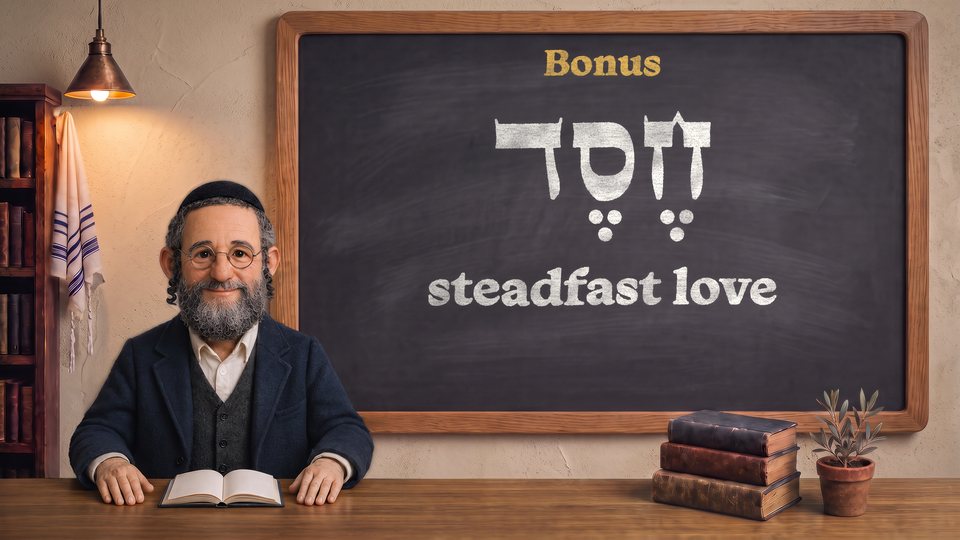
Steadfast love
See what one Hebrew word holds, the word behind mercy, kindness and steadfast love, and why English Bibles need five or more words for it
TranscriptEvery word of the film, with the Hebrew
Download PDFTap a time to play the film from there.
The hook
A widow stands on a road in Moab; with her two daughters in law. She has nothing left to give them. So she gives them a wish. May the LORD do, חֶסֶד chesed, with you.
And in Jerusalem, a whole congregation sings; twenty-six times in one psalm. כִּי לְעוֹלָם חַסְדּוֹ Ki le-olam chasdo. For his חֶסֶד chesed, is for ever.
One word. Your Bible has mercy for it. Or kindness. Or lovingkindness. Or steadfast love.
Or simply, love. Five English words; and none of them is wrong. And none of them is enough.
Welcome
שָׁלוֹם Shalom. I am Moreh Ezra; and this is a bonus. Shorter than a lesson. No new rules. One word.
And if you have come here without the lessons before it; you can still follow every step.
The word is חֶסֶד chesed. The first sound comes from the back of the throat; like the end of, loch. And the weight is on the first half. It stands two hundred and forty-seven times in the Hebrew Bible; and more than half of those, are in the Psalms.
Now count what the King James Bible writes for it. Mercy: a hundred and forty-nine times. Kindness: forty. Lovingkindness: thirty. Goodness: twelve.
And then it still needs: kindly; merciful; favour; and pity. Eight English words; for one Hebrew word. I shall leave it in Hebrew. By the end, you will not want it translated.
Something one does
In English, mercy and love are things you feel. Now look at the verb that stands with our word in Hebrew. Naomi says: may the LORD, do; עִמָּכֶם חֶסֶד immakhem chesed. With you; חֶסֶד chesed. And she goes on: כַּאֲשֶׁר עֲשִׂיתֶם עִם הַמֵּתִים וְעִמָּדִי ka-asher asitem im ha-metim ve-immadi.
As you have done; with the dead; and with me. The verb is, do. Twice, in her one sentence. And after it, each time; the little word: with.
Abraham’s servant, at the well, prays with the same two words. וַעֲשֵׂה חֶסֶד עִם אֲדֹנִי אַבְרָהָם Va-aseh chesed im adoni Avraham. And do חֶסֶד chesed; with my master Abraham.
I counted. Do, is the verb that goes with this word more than any other. In forty-nine verses. So it is, first of all, a deed. It can be seen.
It can be remembered. Naomi can point to what the two young women have done.
And look who does it, to whom. Two young women; and their husbands’ mother. A servant’s God; and his master. The two are bound to each other, before the deed is done. This word is what a person does, who is true to that bond; and does more than the bond could force.
The prophet Micah puts it in a short list, of what is asked of a human being. עֲשׂוֹת מִשְׁפָּט וְאַהֲבַת חֶסֶד Asot mishpat ve-ahavat chesed. To do justice; and to love חֶסֶד chesed.
The partner word
Some words go about in pairs; and this one has a fixed partner. חֶסֶד וֶאֱמֶת Chesed ve-emet. The partner is אֱמֶת emet: faithfulness; truth. It comes from the same root as, amen; and it means: what is firm. What holds.
The two stand side by side, twenty times in the Bible. Where the King James says, mercy and truth; these are the two.
And the pair tells you how to hear our word. This is no passing mood. It is kindness that can be counted on.
A second partner is, good. You know it from the end of a famous psalm. אַךְ טוֹב וָחֶסֶד יִרְדְּפוּנִי כָּל יְמֵי חַיָּי Akh tov va-chesed yirdefuni kol yemei chayyai. Surely goodness, and חֶסֶד chesed; shall follow me, all the days of my life. So the King James.
But the Hebrew verb is stronger than, follow. It is the verb for chasing an enemy. All his life, this man has been chased. Now he is chased by goodness; and חֶסֶד chesed. He does not seem to mind.
Three steps in Ruth
The book of Ruth has our word three times. Once in each of its first three chapters. And each time, the story turns on it.
The first step, you have heard: a wish. May the LORD do חֶסֶד chesed with you; as you have done. Naomi has nothing to give. So she measures God’s חֶסֶד chesed, by theirs.
The second step: a blessing. Ruth comes home from the field of Boaz; with her arms full of grain. And Naomi says: blessed be he, by the LORD; אֲשֶׁר לֹא עָזַב חַסְדּוֹ אֶת הַחַיִּים וְאֶת הַמֵּתִים asher lo azav chasdo et ha-chayyim ve-et ha-metim. Who has not left off his חֶסֶד chesed; with the living, and with the dead.
Who has not left it off? The first word can hang on the LORD; or on the man she is blessing. The Hebrew does not say which; and readers have taken it both ways. If you have Lesson twenty-one; you know that word as the hook. Here is a hook, with two nails to hang on.
And the third step. At night, on the threshing floor, Boaz says to Ruth: הֵיטַבְתְּ חַסְדֵּךְ הָאַחֲרוֹן מִן הָרִאשׁוֹן heitavt chasdekh ha-acharon min ha-rishon. You have made your last חֶסֶד chesed, better than the first. Now it is done by a person. By a foreigner.
A young woman from Moab. And it can be counted. There was a first. This is the last.
So the wish of chapter one, comes round. Naomi asked that it be done with Ruth: as you have done. By chapter three; it is Ruth’s own, that carries the story.
The refrain
And the psalm. A hundred and thirty-six. Twenty-six verses; and every one of them ends with the same three words. כִּי לְעוֹלָם חַסְדּוֹ Ki le-olam chasdo. For; for ever; his חֶסֶד chesed.
Look for the verb. There is none. No, is. No, endures. Hebrew sets, for ever; and, his חֶסֶד chesed; side by side; and lets them stand.
If you have Lesson nineteen; you know this as a clause without a verb. The King James’s, endureth; was supplied by the translators.
The psalm is a song for two sides. One voice gives the first half of each verse. To him who alone does great wonders. And everybody answers. כִּי לְעוֹלָם חַסְדּוֹ Ki le-olam chasdo.
The Bible tells of it being sung so; when the foundation of the second temple was laid. And the same words stand in sixteen more verses, outside this psalm. It may be the most repeated line in the Bible.
The prophets use the word in another key. Here, it is God who looks for it. כִּי חֶסֶד חָפַצְתִּי וְלֹא זָבַח Ki chesed chafatsti ve-lo zavach. For חֶסֶד chesed, I desire; and not sacrifice. The word stands in front of its verb.
If you have Lesson eighteen; you know why.
Where “mercy” came from
So why does the King James say, mercy; so often? The answer is a chain of translations. More than two thousand years ago, Jewish translators put the Bible into Greek; and for our word, they chose a Greek word for pity. The Latin Bible followed the Greek. The first English Bibles followed the Latin.
Then, in fifteen thirty-five, Miles Coverdale tried something new. He built an English word, for this one Hebrew word. Lovingkindness. And, steadfast love; is the twentieth century’s answer, to the same question.
The word has two relatives worth knowing. The first: חֲסִידִים chasidim. People marked by חֶסֶד chesed. The faithful ones. The King James often writes: saints.
The Hasidim take their name from this word.
And the second relative, has feathers. In the list of birds in Leviticus, stands: הַחֲסִידָה ha-chasidah. The stork. It is the same word, with the feminine ending. The loyal one.
The old explanation is, that the stork was known for the care of its own. And Jeremiah calls her as a witness. גַּם חֲסִידָה בַשָּׁמַיִם יָדְעָה מוֹעֲדֶיהָ Gam chasidah va-shamayim yade’ah mo’adeiha. Even the stork in the heavens, knows her seasons. A bird named, loyal.
I know people with less to live up to.
What the word holds
Put the pieces together. חֶסֶד Chesed is done; with somebody; inside a bond. Its partner is faithfulness. People do it; and God does it; and the same word serves for both. It can be asked for.
Counted. Remembered. And sung.
Mercy, hears the kindness in it. Loyalty, hears the bond. Steadfast love, tries to say both at once. Now that you know the Hebrew word; you can hear all of it; wherever your Bible has any one of them.
One thing to do. Open Psalm one hundred and thirty-six; and read it aloud, with somebody. One of you reads the first half of each verse. The other answers each time, in Hebrew. כִּי לְעוֹלָם חַסְדּוֹ Ki le-olam chasdo.
After twenty-six times; you will not forget it. שָׁלוֹם Shalom.
Until next time: לֵךְ לְשָׁלוֹם lekh leshalom. Go in peace.
יַ֣עַשׂ יְהוָ֤ה עִמָּכֶם֙ חֶ֔סֶד
yá'aś [the LORD] 'immākhem ḥésed
"May the LORD do ḥésed with you." (Ruth 1:8)
הוֹד֣וּ לַיהוָ֣ה כִּי־ט֑וֹב כִּ֖י לְעוֹלָ֣ם חַסְדּֽוֹ׃
hôdû la[the LORD] kî-ṭôv, kî lə'ôlām ḥasdô
"Give thanks to the LORD, for he is good, for his ḥésed is for ever." (Ps 136:1)
A widow on a road in Moab says the first line to her two daughters-in-law. A whole congregation sings the second. Both lines turn on one Hebrew word, חֶסֶד ḥésed, and this page leaves it untranslated on purpose.
This is a bonus: shorter than a lesson, free, and with no new rules. If you have come to it without the lessons before it, you can still follow every step. Each Hebrew word stands in Hebrew letters, in Latin letters and in English. Say the first sound of ḥésed at the back of the throat, like the "ch" in "loch", and put the weight on the first half: ḤE-sed.
The word stands about 250 times in the Hebrew Bible, and about half of those are in the Psalms. The King James Version writes "mercy" for it 149 times, "kindness" 40 times, "lovingkindness" 30 times and "goodness" 12 times. Then it needs "kindly", "merciful", "favour" and "pity" as well.
1. One word, many English words
Here is the line that Psalm 136 repeats, as five English Bibles give it.
| Bible | The refrain of Psalm 136 |
|---|---|
| King James Version | "for his mercy endureth for ever" |
| New American Standard Bible (1995) | "for His lovingkindness is everlasting" |
| English Standard Version | "for his steadfast love endures forever" |
| New International Version | "His love endures forever" |
| Christian Standard Bible | "His faithful love endures forever" |
Five Bibles, five answers, and the Hebrew is the same three words every time: כִּי לְעוֹלָם חַסְדּוֹ kî lə'ôlām ḥasdô. The last of them is our word with "his" on its end. When an ending is added, ḥésed draws itself together: ḥasd-, and then -ô "his".
One Bible alone needs several words too. Follow the King James Version through the verses of this page.
| Verse | Hebrew | King James Version |
|---|---|---|
| Ruth 1:8 | יַעַשׂ יְהוָה עִמָּכֶם חֶסֶד yá'aś [the LORD] 'immākhem ḥésed | "the LORD deal kindly with you" |
| Gen 24:12 | וַעֲשֵׂה־חֶסֶד עִם אֲדֹנִי אַבְרָהָם wa'ăśê-ḥésed 'im 'ădōnî 'avrāhām | "and shew kindness unto my master Abraham" |
| Exod 34:6 | וְרַב־חֶסֶד וֶאֱמֶת wərav-ḥésed we'ĕmet | "abundant in goodness and truth" |
| Hos 6:6 | כִּי חֶסֶד חָפַצְתִּי וְלֹא־זָבַח kî ḥésed ḥāfáṣtî wəlō'-zāvaḥ | "For I desired mercy, and not sacrifice" |
None of these is a mistake. Each catches one side of the word, and each lets the other sides go. That is what a translator must do when one language has a word and the other has not.
2. Something one does
In English, mercy and love are things you feel. Look at the verb that stands with ḥésed in Hebrew.
יַ֣עַשׂ יְהוָ֤ה עִמָּכֶם֙ חֶ֔סֶד כַּאֲשֶׁ֧ר עֲשִׂיתֶ֛ם עִם־הַמֵּתִ֖ים וְעִמָּדִֽי׃
yá'aś [the LORD] 'immākhem ḥésed, ka'ăšer 'ăśîtem 'im-hammētîm wə'immādî
"May the LORD do ḥésed with you, as you have done with the dead and with me." (Ruth 1:8)
וַעֲשֵׂה־חֶ֕סֶד עִ֖ם אֲדֹנִ֥י אַבְרָהָֽם׃
wa'ăśê-ḥésed, 'im 'ădōnî 'avrāhām
"and do ḥésed with my master Abraham" (Gen 24:12)
The verb is "do", twice in Naomi's one sentence: יַעַשׂ yá'aś "may he do", and עֲשִׂיתֶם 'ăśîtem "you have done". Abraham's servant prays with the same verb, וַעֲשֵׂה wa'ăśê "and do". And after the verb comes the little word "with": עִמָּכֶם 'immākhem "with you", עִם 'im "with". One does ḥésed with somebody.
A small note on Naomi's first word. It is printed here as it is read aloud. In the manuscripts it is written with one letter more, and the lessons on Ruth explain why.
"Do" is the verb that goes with this word more than any other, in about fifty verses of the Bible. So ḥésed is first of all a deed. It can be seen, and it can be remembered: Naomi can point to what the two young women have done.
And look who does it to whom. Two young women and their husbands' mother. The LORD and Abraham. In other places it is a host and her guests, two friends under oath, a king and those who stood by his father. The two are bound to each other before the deed is done. ḥésed is what a person does who is true to that bond, and does more than the bond could force.
The prophet Micah puts it in a short list of what is asked of a human being:
עֲשׂ֤וֹת מִשְׁפָּט֙ וְאַ֣הֲבַת חֶ֔סֶד
'ăśôt mišpāṭ wə'áhăvat ḥésed
"to do justice, and to love ḥésed" (Mic 6:8)
ḥésed is done. Its verb is "do", and its little word is "with".
3. The partner word
Some words go about in pairs. This one has a fixed partner.
יְהוָ֣ה ׀ יְהוָ֔ה אֵ֥ל רַח֖וּם וְחַנּ֑וּן אֶ֥רֶךְ אַפַּ֖יִם וְרַב־חֶ֥סֶד וֶאֱמֶֽת
[the LORD] [the LORD], 'ēl raḥûm wəḥannûn, 'érekh 'appáyim wərav-ḥésed we'ĕmet
"The LORD, the LORD, a God compassionate and gracious, slow to anger, and abounding in ḥésed and faithfulness." (Exod 34:6)
חֶסֶד וֶאֱמֶת ḥésed we'ĕmet: "ḥésed and faithfulness". The partner is 'ĕmet, "faithfulness, truth". It comes from the same root as "Amen", and it means what is firm, what holds. The two words stand side by side about twenty times in the Bible. Where the King James Version says "mercy and truth", these are the two.
The pair tells you how to hear our word. ḥésed that goes with 'ĕmet is no passing mood. It is kindness that can be counted on.
A second partner is "good". You may know it from the end of a famous psalm:
אַ֤ךְ ׀ ט֤וֹב וָחֶ֣סֶד יִ֭רְדְּפוּנִי כָּל־יְמֵ֣י חַיָּ֑י
'akh ṭôv wāḥésed yirdəfûnî kol-yəmê ḥayyāy
"Surely goodness and ḥésed shall pursue me all the days of my life." (Ps 23:6)
The King James Version has "goodness and mercy shall follow me". The Hebrew verb is stronger than "follow". It is the verb for chasing an enemy, and here the ones who chase are goodness and ḥésed.
4. Three steps in Ruth
The book of Ruth has the word three times, once in each of its first three chapters, and each time the story turns on it.
The first step: a wish יַעַשׂ יְהוָה עִמָּכֶם חֶסֶד yá'aś [the LORD] 'immākhem ḥésed, "May the LORD do ḥésed with you" (Ruth 1:8). Naomi has nothing to give the two young widows. She hands them over to the LORD's ḥésed, and she measures it by their own: "as you have done".
The second step: a blessing Ruth comes home from the field of Boaz with her arms full of grain, and Naomi says:
בָּר֥וּךְ הוּא֙ לַיהוָ֔ה אֲשֶׁר֙ לֹא־עָזַ֣ב חַסְדּ֔וֹ אֶת־הַחַיִּ֖ים וְאֶת־הַמֵּתִ֑ים
bārûkh hû' la[the LORD], 'ăšer lō'-'āzav ḥasdô, 'et-haḥayyîm wə'et-hammētîm
"Blessed be he by the LORD, who has not left off his ḥésed with the living and with the dead." (Ruth 2:20)
Who has not left off his ḥésed? The little word אֲשֶׁר 'ăšer "who" can hang on "the LORD", the nearest word, or on "he", the man she is blessing. The Hebrew does not say which, and readers have taken it both ways. If you have Lesson 21, you know this word as the hook, and here is a hook with two nails to hang on.
The third step: a deed, and a second one At night on the threshing floor Boaz says to Ruth:
הֵיטַ֛בְתְּ חַסְדֵּ֥ךְ הָאַחֲר֖וֹן מִן־הָרִאשׁ֑וֹן
hêṭavt ḥasdēkh hā'aḥărôn min-hāri'šôn
"You have made your last ḥésed better than the first." (Ruth 3:10)
Now it is ḥésed done by a person, and by a foreigner, a young woman from Moab. It has an ending again: חַסְדֵּךְ ḥasdēkh, "your ḥésed", said to a woman. And it can be counted. There was a first, which most readers take to be her staying with Naomi. This is the last.
So the wish of chapter 1 comes round. Naomi asked that ḥésed be done with Ruth, "as you have done". By chapter 3 it is Ruth's own ḥésed that carries the story.
5. The refrain
Psalm 136 has twenty-six verses, and every one of them ends with the same three words.
הוֹד֣וּ לַיהוָ֣ה כִּי־ט֑וֹב כִּ֖י לְעוֹלָ֣ם חַסְדּֽוֹ׃
hôdû la[the LORD] kî-ṭôv, kî lə'ôlām ḥasdô
"Give thanks to the LORD, for he is good, for his ḥésed is for ever." (Ps 136:1)
לְעֹ֘שֵׂ֤ה נִפְלָא֣וֹת גְּדֹל֣וֹת לְבַדּ֑וֹ כִּ֖י לְעוֹלָ֣ם חַסְדּֽוֹ׃
lə'ōśê niflā'ôt gədōlôt ləvaddô, kî lə'ôlām ḥasdô
"To him who alone does great wonders, for his ḥésed is for ever." (Ps 136:4)
ה֭וֹדוּ לְאֵ֣ל הַשָּׁמָ֑יִם כִּ֖י לְעוֹלָ֣ם חַסְדּֽוֹ׃
hôdû lə'ēl haššāmāyim, kî lə'ôlām ḥasdô
"Give thanks to the God of the heavens, for his ḥésed is for ever." (Ps 136:26)
כִּי לְעוֹלָם חַסְדּוֹ kî lə'ôlām ḥasdô: "for", "for ever", "his ḥésed". There is no word for "is" and no word for "endures". Hebrew sets "for ever" and "his ḥésed" side by side and lets them stand. If you have Lesson 19, you know this as a clause with no verb. The English verbs in the table of section 1, "endureth" and "endures", were supplied by the translators.
The psalm reads like a song for two sides. One voice gives the first half of each verse, and everybody answers with the second. The Bible tells of it being sung so. When the foundation of the second temple was laid, "they answered in praise and in thanks to the LORD": כִּי טוֹב כִּי־לְעוֹלָם חַסְדּוֹ kî ṭôv kî-lə'ôlām ḥasdô, "for he is good, for his ḥésed is for ever" (Ezra 3:11). The words "for ever" and "his ḥésed" stand together in sixteen more verses outside this psalm.
The prophets use the word in another key. Here it is God who looks for it:
כִּ֛י חֶ֥סֶד חָפַ֖צְתִּי וְלֹא־זָ֑בַח
kî ḥésed ḥāfáṣtî wəlō'-zāvaḥ
"For ḥésed I desire, and not sacrifice." (Hos 6:6)
The word stands in front of its verb, where a Hebrew sentence puts what it wants you to hear first. If you have Lesson 18, you know why.
6. Where "mercy" came from, and two relatives
Why does the King James Version say "mercy" so often? The answer is a chain of translations. More than two thousand years ago Jewish translators put the Bible into Greek, and for ḥésed they chose a Greek word for pity and mercy. The Latin Bible followed the Greek. The first English Bibles followed the Latin. In 1535 the translator Miles Coverdale tried something new and built an English word for this one Hebrew word: "lovingkindness". "Steadfast love" is a twentieth-century answer to the same question.
The word has two relatives worth knowing.
The faithful one חֲסִידִים ḥăsîdîm are people marked by ḥésed: "the faithful", "the loyal ones". The word for one of them stands thirty-two times in the Bible, and twenty-five of those are in the Psalms. The King James Version often writes "saints". Psalm 149 speaks of בִּקְהַל חֲסִידִים biqhal ḥăsîdîm, "the assembly of the faithful". The Hasidim take their name from this word.
The stork In the list of birds in Leviticus stands הַחֲסִידָה haḥăsîdâ, "the stork" (Lev 11:19). It is the same word with the feminine ending: the loyal one. The old explanation is that the stork was known for its care of its own. Jeremiah calls it as a witness:
גַּם־חֲסִידָ֣ה בַשָּׁמַ֗יִם יָֽדְעָה֙ מֽוֹעֲדֶ֔יהָ
gam-ḥăsîdâ vaššāmáyim yādə'â mô'ădêhā
"Even the stork in the heavens knows her seasons." (Jer 8:7)
7. What the word holds
Put the pieces together. ḥésed is done, with somebody, inside a bond. Its partner is faithfulness. People do it and God does it, and the same word serves for both. It can be asked for, counted, remembered and sung. "Mercy" hears the kindness in it. "Loyalty" hears the bond. "Steadfast love" tries to say both at once. Now that you know the Hebrew word, you can hear all of it wherever your Bible has any one of them.
Before next time Open Psalm 136 in your own Bible and read it aloud with somebody. One of you reads the first half of each verse. The other answers each time in Hebrew: kî lə'ôlām ḥasdô.
Exercises
Type your answers in plain letters; accents and hyphens don't matter.