BonusMEBH-06-02
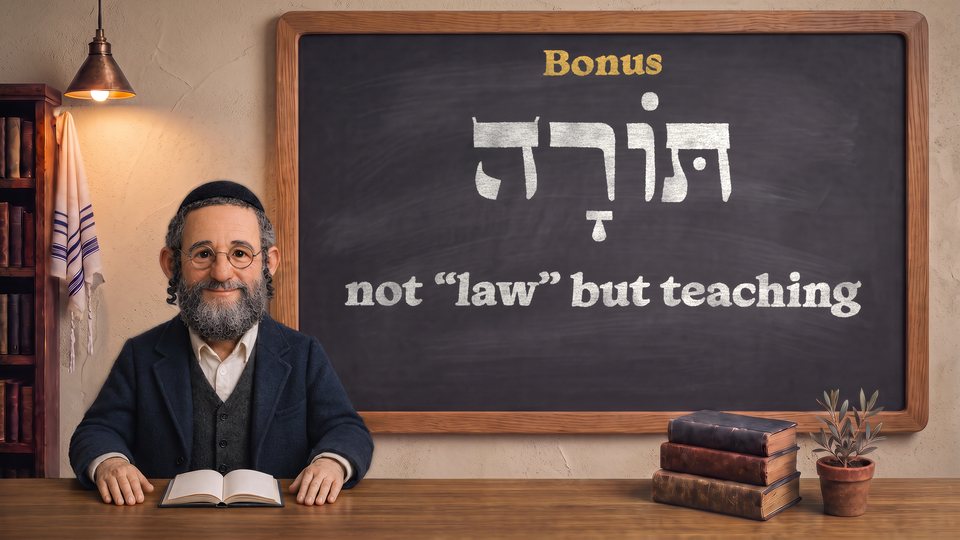
Not "law" but teaching
See that the Hebrew word behind "the law" comes from a verb that means to show the way, and hear how Psalm 1 changes when the word is given back its own meaning
TranscriptEvery word of the film, with the Hebrew
Download PDFTap a time to play the film from there.
The hook
Blessed is the man; says the first psalm. And then it says what he enjoys. In the King James Bible: his delight is in the law of the LORD; and in his law doth he meditate, day and night.
Read that as English; and you see a man who enjoys a law book. The way some people enjoy the tax code. It has puzzled many readers.
The puzzle is one English word. Law. The Hebrew word behind it, means something else first.
Welcome
שָׁלוֹם Shalom. I am Moreh Ezra; and this is a bonus. Shorter than a lesson. No new rules. One word.
And if you have come here without the lessons before it; you can still follow every step.
The word is תּוֹרָה torah. Say it with the weight at the end. It stands two hundred and nineteen times in the Hebrew Bible. And the King James writes, law, for it; two hundred and nineteen times. Every time.
Sometimes, that sounds right. תּוֹרַת אֱלֹהֵינוּ Torat Eloheinu. The law of our God.
Sometimes, it sounds a little odd. זֹאת תּוֹרַת הָעֹלָה Zot torat ha-olah. This is the law of the burnt offering. It is the heading of a few lines, that tell a priest what to do with one kind of sacrifice.
And once, it is plainly wrong. תּוֹרַת אִמֶּךָ Torat immekha. The law of thy mother. A mother has no laws. She has things she has told you, since you could walk.
One Hebrew word fits all of these. So it must mean something wider than law; and its root says what.
The verb: to point the way
The root has three letters. Yod. Resh. He. And its verb, in its plainest use, has nothing to do with school.
Jacob is travelling down to Egypt, with his whole family; and he does not know the road to the land of Goshen. So he sends Judah ahead. לְהוֹרֹת לְפָנָיו גֹּשְׁנָה Lehorot lefanav Goshnah. To point the way before him; to Goshen.
Somebody walks in front; and shows where to go. That is the verb.
The second use is not far from the first. In the wilderness, the people come to water that is too bitter to drink. Moses cries out. And then: וַיּוֹרֵהוּ va-yorehu. The LORD showed him; a piece of wood.
He did not know what to do; and he was shown.
From there, it is one step to what we call teaching. Isaiah sees the nations going up to Jerusalem; and this is what they want. וְיֹרֵנוּ מִדְּרָכָיו וְנֵלְכָה בְּאֹרְחֹתָיו Ve-yorenu mi-derakhav ve-nelekhah be-orchotav. That he may teach us of his ways; and that we may walk in his paths. Look at the company the verb keeps.
Ways. Walk. Paths. Teaching, in Hebrew, is still a matter of roads.
And the same verse ends: כִּי מִצִּיּוֹן תֵּצֵא תוֹרָה ki mi-Tsiyyon tetse torah. For out of Zion shall go forth, תּוֹרָה torah. The verb, and its noun, in one verse. They ask to be shown the way; and what goes out, is תּוֹרָה torah. The noun is simply what the verb gives.
A pointing of the way. Direction. Instruction. Teaching. And the one who does the pointing?
מוֹרֶה Moreh. A teacher. From the same root. It is the first word of my own name. What a מוֹרֶה moreh gives; is תּוֹרָה torah.
A mother's teaching
Now go back to the verse that sounded wrong. שְׁמַע בְּנִי מוּסַר אָבִיךָ וְאַל תִּטֹּשׁ תּוֹרַת אִמֶּךָ Shema beni musar avikha ve-al tittosh torat immekha. Hear, my son, the discipline of your father; and do not let go of the תּוֹרָה torah of your mother. With, teaching; the line is as plain as it could be. The book of Proverbs has the word thirteen times; and nearly always for what parents, and the wise, hand on.
The last chapter of the book praises a woman with it. וְתוֹרַת חֶסֶד עַל לְשׁוֹנָהּ Ve-torat chesed al leshonah. And a תּוֹרָה torah of חֶסֶד chesed, is on her tongue. If you have the fourth bonus; you know the second word. Steadfast love.
The King James has: the law of kindness. What she says, shows people a way; and the way is kind.
And one line sets our word beside a neighbour. כִּי נֵר מִצְוָה וְתוֹרָה אוֹר Ki ner mitsvah ve-torah or. For a commandment is a lamp; and תּוֹרָה torah, is light. A commandment is one thing you are told to do. A lamp: enough to see the next step.
תּוֹרָה Torah, is the daylight.
A priest's answer
The word has a narrower use too; and here, law, comes closer. In Israel, you went to a priest, when you did not know what was right, in some matter of worship. Is this food clean? May I touch that? The answer he gave, was a תּוֹרָה torah.
The prophet Haggai is sent to fetch one. שְׁאַל נָא אֶת הַכֹּהֲנִים תּוֹרָה She’al na et ha-kohanim torah. Ask the priests, please; for a תּוֹרָה torah. One question. One answer.
When such answers were gathered, and written down; each group got the word as its heading. That is our line from Leviticus: this is the תּוֹרָה torah of the burnt offering. The word stands sixteen times in Leviticus; nearly always so.
And Deuteronomy sets the noun and the verb side by side. עַל פִּי הַתּוֹרָה אֲשֶׁר יוֹרוּךָ Al pi ha-torah asher yorukha. According to the תּוֹרָה torah; that they shall teach you. Instruction; that they instruct. The King James has: the sentence of the law, which they shall teach thee.
And the echo is gone.
The Teaching
In Deuteronomy, the word grows. Moses stands at the edge of the land, and speaks for thirty chapters; and the whole speech gets the name. וְזֹאת הַתּוֹרָה אֲשֶׁר שָׂם מֹשֶׁה לִפְנֵי בְּנֵי יִשְׂרָאֵל Ve-zot ha-torah asher sam Mosheh lifnei benei Yisra’el. And this is the תּוֹרָה torah; that Moses set before the sons of Israel. It has the article now.
The Teaching. To this day, that verse is said, or sung, in the synagogue; when the scroll is lifted up, for everybody to see.
From there, the name spread to all five books; from Genesis to Deuteronomy. They are the Torah.
Now think what is in those five books. There are commandments; hundreds of them. But the first book is story, almost from end to end. A garden. A flood.
A tower. Abraham. Jacob. Joseph. Call the five books, the Law; and Genesis hardly belongs in them.
Call them, the Teaching; and it belongs very well. Stories teach.
Where “law” came from
So where did, law, come from? By the road you know from the last two bonuses. More than two thousand years ago, the Torah was put into Greek; and for our word, the translators chose: nomos. A wide word in Greek. Custom; a whole way of life; as well as statute.
The Latin Bible put: lex. And the first English Bibles put, law, for that. At each step, the word grew a little narrower; until English readers heard only the courtroom.
Law, is not a mistake. The Torah holds laws. But law is the smaller word. It keeps the commandments; and loses the road; the mother; and the story.
And some newer translations have gone back. One widely used Jewish translation now has: the teaching of the LORD, is his delight.
Day and night
So go back to the psalm; with the word in your ear. כִּי אִם בְּתוֹרַת אֲדֹנָי חֶפְצוֹ Ki im be-torat Adonai cheftso. But in the תּוֹרָה torah of the LORD, is his delight. וּבְתוֹרָתוֹ יֶהְגֶּה יוֹמָם וָלָיְלָה U-ve-torato yehgeh yomam va-laylah. And his תּוֹרָה torah, he murmurs; day and night.
Murmurs? The King James says, meditate; and that sounds silent. The Hebrew verb is a sound. Isaiah uses it of a lion, over its prey. כַּאֲשֶׁר יֶהְגֶּה הָאַרְיֵה Ka-asher yehgeh ha-aryeh.
As the lion growls. And he uses it of a dove. אֶהְגֶּה כַּיּוֹנָה Ehgeh ka-yonah. I moan, like a dove. It is a low noise in the throat.
In the ancient world, reading was done aloud; even alone. A man with a text spoke it, half aloud, to himself; over and over. Joshua is told the same thing, in the same words; and the same verse says where the Torah is to be. It shall not depart, from your mouth.
So this is the man of the first psalm. He is no lawyer. He has been shown a way, by one he trusts. He is glad of it. And he says it over to himself, as he goes; like a dove under the roof.
What the word holds
One thing to do. Open Psalm one, in your own Bible; all six verses; and say, teaching, in verse two. Then look at Psalm one hundred and nineteen; the longest chapter in the Bible. Our word stands in it twenty-five times.
And when you next meet, the law, in your English Bible; try: the teaching; and see what changes. שָׁלוֹם Shalom.
Until next time: לֵךְ לְשָׁלוֹם lekh leshalom. Go in peace.
כִּ֤י אִ֥ם בְּתוֹרַ֥ת יְהוָ֗ה חֶ֫פְצ֥וֹ וּֽבְתוֹרָת֥וֹ יֶהְגֶּ֗ה יוֹמָ֥ם וָלָֽיְלָה׃
kî 'im bətôrat [the LORD] ḥefṣô ûvətôrātô yehgê yômām wālāylâ
"But in the teaching of the LORD is his delight, and his teaching he murmurs day and night." (Ps 1:2)
The King James Version has: "But his delight is in the law of the LORD; and in his law doth he meditate day and night." Read that as English and you see a man who enjoys a law book, the way some people enjoy the tax code. It has puzzled many readers.
The Hebrew word is תּוֹרָה tôrâ, and "law" is not what it means first. It comes from a verb that means to point out the way.
This is a bonus: shorter than a lesson, free, and with no new rules. It follows one word. A note on the letters, if you have come to this page first: ô and â are long vowels, š is said "sh", and ḥ is the ch of "loch". In the lines of Hebrew sounds the name of God is not written out. You will see [the LORD] there.
1. One word, one English word
The noun stands 219 times in the Hebrew Bible, and the King James Version writes "law" for it every time. Here are four of those places.
| Verse | Hebrew | King James Version |
|---|---|---|
| Ps 1:2 | בְּתוֹרַת יְהוָה bətôrat [the LORD] | "the law of the LORD" |
| Isa 1:10 | תּוֹרַת אֱלֹהֵינוּ tôrat 'ĕlōhênû | "the law of our God" |
| Lev 6:9 | זֹאת תּוֹרַת הָעֹלָה zō't tôrat hā'ōlâ | "This is the law of the burnt offering" |
| Prov 1:8 | תּוֹרַת אִמֶּךָ tôrat 'immékhā | "the law of thy mother" |
(Leviticus 6:9 is 6:2 in Hebrew Bibles.)
The first two sound right in English. The third is already a little odd: it is the heading of a few lines that tell a priest what to do with one kind of sacrifice. And the fourth is plainly wrong. A mother has no laws. She has things she has told you since you could walk.
One Hebrew word fits all four. So the word must mean something wider than "law", and its root says what.
2. The verb: to point the way
The three root letters are Y-R-H, ירה. In the stem that makes somebody do or see something (the Hiphil, for those who have Lesson 16), the verb is הוֹרָה hôrâ. Its plainest use has nothing to do with school. Jacob is travelling to Egypt with his whole family, and he does not know the road to the land of Goshen:
וְאֶת־יְהוּדָ֞ה שָׁלַ֤ח לְפָנָיו֙ אֶל־יוֹסֵ֔ף לְהוֹרֹ֥ת לְפָנָ֖יו גֹּ֑שְׁנָה
wə'et-yəhûdâ šālaḥ ləfānāyw 'el-yôsēf, ləhôrōt ləfānāyw gōšnâ
"And Judah he sent ahead of him to Joseph, to point the way before him to Goshen." (Gen 46:28)
לְהוֹרֹת ləhôrōt, "to point the way". Somebody walks in front and shows where to go.
The second use is not far from the first. In the wilderness the people come to water that is too bitter to drink. Moses cries out:
וַיּוֹרֵ֤הוּ יְהוָה֙ עֵ֔ץ
wayyôrēhû [the LORD] 'ēṣ
"And the LORD showed him a piece of wood." (Exod 15:25)
He did not know what to do, and he was shown.
From there it is one step to what we call teaching. Isaiah sees the nations going up to Jerusalem, and this is what they say they want:
וְיֹרֵ֨נוּ֙ מִדְּרָכָ֔יו וְנֵלְכָ֖ה בְּאֹרְחֹתָ֑יו
wəyōrēnû middərākhāyw, wənēləkhâ bə'ōrəḥōtāyw
"... that he may teach us of his ways, and that we may walk in his paths." (Isa 2:3)
Look at the words that stand around the verb: "ways", "walk", "paths". Teaching, in Hebrew, is still a matter of roads. And the same verse ends like this:
כִּ֤י מִצִּיּוֹן֙ תֵּצֵ֣א תוֹרָ֔ה וּדְבַר־יְהוָ֖ה מִירוּשָׁלִָֽם׃
kî miṣṣiyyôn tēṣē' tôrâ, ûdəvar-[the LORD] mîrûšāláyim
"For out of Zion shall go forth tôrâ, and the word of the LORD from Jerusalem." (Isa 2:3)
The verb and its noun, in one verse. They ask to be shown the way, and what goes out is tôrâ. The noun is simply the thing the verb gives: a pointing of the way. English has good words for that: direction, instruction, teaching.
3. A mother's teaching
Now go back to the verse that sounded wrong.
שְׁמַ֣ע בְּ֭נִי מוּסַ֣ר אָבִ֑יךָ וְאַל־תִּ֝טֹּ֗שׁ תּוֹרַ֥ת אִמֶּֽךָ׃
šəma' bənî mûsar 'āvîkhā, wə'al-tiṭṭōš tôrat 'immékhā
"Hear, my son, the discipline of your father, and do not let go of the teaching of your mother." (Prov 1:8)
With "teaching" the line is as plain as it could be. The book of Proverbs uses the word thirteen times, and nearly always for what parents and wise people hand on. A father says:
בְּ֭נִי תּוֹרָתִ֣י אַל־תִּשְׁכָּ֑ח
bənî tôrātî 'al-tiškāḥ
"My son, my teaching do not forget." (Prov 3:1)
And the last chapter of the book praises a woman with these words:
פִּ֭יהָ פָּתְחָ֣ה בְחָכְמָ֑ה וְתֽוֹרַת־חֶ֝֗סֶד עַל־לְשׁוֹנָֽהּ׃
pîhā pātəḥâ vəḥokhmâ, wətôrat-ḥésed 'al-ləšônāh
"Her mouth she has opened with wisdom, and a teaching of ḥésed is on her tongue." (Prov 31:26)
The King James Version has "in her tongue is the law of kindness". The Hebrew is וְתוֹרַת־חֶסֶד wətôrat-ḥésed: the word of this bonus leaning on the word of the fourth bonus, ḥésed, steadfast love. What she says shows people a way, and the way is kind.
One more line from Proverbs sets our word beside a neighbour:
כִּ֤י נֵ֣ר מִ֭צְוָה וְת֣וֹרָה א֑וֹר
kî nēr miṣwâ wətôrâ 'ôr
"For a commandment is a lamp, and teaching is light." (Prov 6:23)
A מִצְוָה miṣwâ is a commandment: one thing you are told to do. It is a lamp, enough to see the next step. tôrâ is the daylight. And the last word of the line, 'ôr "light", is the second word God says in the Bible.
4. A priest's answer
The word has a narrower use too, and here "law" comes closer. In Israel you went to a priest when you did not know what was right in some matter of worship: is this food clean, may I touch that, what do I do with this offering? The answer he gave was a tôrâ. The prophet Haggai is told to go and get one:
שְׁאַל־נָ֧א אֶת־הַכֹּהֲנִ֛ים תּוֹרָ֖ה
šə'al-nā' 'et-hakkōhănîm tôrâ
"Ask the priests, please, for a tôrâ." (Hag 2:11)
One question, one answer. And when such answers were gathered and written down, each group got the word as its heading. That is the line from Leviticus in our table: זֹאת תּוֹרַת הָעֹלָה zō't tôrat hā'ōlâ, "this is the instruction for the burnt offering". The word stands sixteen times in Leviticus, nearly always in such a heading.
Deuteronomy puts the noun and the verb side by side:
עַל־פִּ֨י הַתּוֹרָ֜ה אֲשֶׁ֣ר יוֹר֗וּךָ
'al-pî hattôrâ 'ăšer yôrûkhā
"According to the instruction that they shall instruct you." (Deut 17:11)
הַתּוֹרָה hattôrâ, and two words later יוֹרוּךָ yôrûkhā. The King James Version has "the sentence of the law which they shall teach thee", and the echo is gone.
A good priest is praised for exactly this. Malachi says of him: תּוֹרַת אֱמֶת הָיְתָה בְּפִיהוּ tôrat 'ĕmet hāyətâ bəfîhû, "teaching of truth was in his mouth" (Mal 2:6). The second word is 'ĕmet, the partner word of the fourth bonus.
A parent's teaching, a wise man's, a priest's answer, a prophet's word: each is a tôrâ.
5. The Teaching
In Deuteronomy the word grows. Moses stands at the edge of the land and speaks for thirty chapters, and the whole speech gets the name:
וְזֹ֖את הַתּוֹרָ֑ה אֲשֶׁר־שָׂ֣ם מֹשֶׁ֔ה לִפְנֵ֖י בְּנֵ֥י יִשְׂרָאֵֽל׃
wəzō't hattôrâ, 'ăšer-śām mōšê, lifnê bənê yiśrā'ēl
"And this is the tôrâ that Moses set before the sons of Israel." (Deut 4:44)
It has the article now, הַתּוֹרָה hattôrâ, "the Teaching". From there the name spread to all five books, from Genesis to Deuteronomy. They are the Torah, the first of the three parts of the Hebrew Bible. To this day the verse you have just read is sung in the synagogue when the scroll is lifted up for everybody to see.
Now think about what is in those five books. There are commandments, hundreds of them. But the Torah begins with the creation of the world, and its first book is story almost from end to end: a garden, a flood, a tower, Abraham, Jacob, Joseph. You have read its first three chapters in Hebrew, if you have come this far in the course, and you did not meet a law code. Call the five books "the Law" and Genesis hardly belongs in them. Call them "the Teaching" and it belongs very well. Stories teach.
The word itself stands only once in Genesis, in the plural, when God says that Abraham kept מִצְוֺתַי חֻקּוֹתַי וְתוֹרֹתָי miṣwōtay ḥuqqôtay wətôrōtāy, "my commandments, my statutes and my teachings" (Gen 26:5).
6. Where "law" came from
More than two thousand years ago the Torah was put into Greek for the Jews of Egypt. The translators chose the Greek word nomos for tôrâ. It was a wide word in Greek, covering custom and a whole way of life as well as statute. The Latin Bible then put lex for it, and the first English Bibles put "law" for that. At each step the word grew a little narrower, until English readers heard only the courtroom.
"Law" is not a mistake. The Torah holds laws, and the word often stands in a row with "statutes" and "judgments". But "law" is the smaller word. It keeps the commandments and loses the road, the mother and the story.
Some newer translations have gone back. One widely used Jewish translation into English now has, for our verse, "the teaching of the LORD is his delight".
7. Day and night
כִּ֤י אִ֥ם בְּתוֹרַ֥ת יְהוָ֗ה חֶ֫פְצ֥וֹ וּֽבְתוֹרָת֥וֹ יֶהְגֶּ֗ה יוֹמָ֥ם וָלָֽיְלָה׃
kî 'im bətôrat [the LORD] ḥefṣô ûvətôrātô yehgê yômām wālāylâ
"But in the teaching of the LORD is his delight, and his teaching he murmurs day and night." (Ps 1:2)
חֶפְצוֹ ḥefṣô "his delight"
The noun is חֵפֶץ ḥēfeṣ: what you take pleasure in, what you would choose. People do delight in being shown the way by someone they trust.
יֶהְגֶּה yehgê "he murmurs"
The King James Version says "meditate", and that sounds silent. The Hebrew verb, הָגָה hāgâ, is a sound. Isaiah uses it of a lion over its prey: כַּאֲשֶׁר יֶהְגֶּה הָאַרְיֵה ka'ăšer yehgê hā'aryê, "as the lion growls" (Isa 31:4). And he uses it of a dove: אֶהְגֶּה כַּיּוֹנָה 'ehgê kayyônâ, "I moan like a dove" (Isa 38:14). It is a low noise in the throat. In the ancient world people usually read aloud, even when alone. A man with a text spoke it half aloud to himself, over and over, and that is what the man of Psalm 1 does.
Joshua is told the same thing with the same words: וְהָגִיתָ בּוֹ יוֹמָם וָלַיְלָה wəhāgîtā bô yômām wāláylâ, "and you shall murmur it day and night" (Josh 1:8). And the same verse says where the Torah is to be: it shall not depart "from your mouth".
יוֹמָם וָלָיְלָה yômām wālāylâ "by day and by night"
יוֹמָם yômām is yôm "day" with an old ending that makes it "by day". The second word is "night", with "and" in front.
So this is the man of Psalm 1. He is no lawyer. He has been shown a way by one he trusts, he is glad of it, and he says it over to himself as he goes, like a dove in the eaves.
When you next meet "the law" in your English Bible, try "the teaching", and see what changes.
Before next time Read Psalm 1 in your own Bible, all six verses, and say "teaching" in verse 2. Then look at Psalm 119, the longest chapter in the Bible. The word stands in it twenty-five times. Read the first eight verses and find it.
8. Words
| Transliteration | Meaning | Root | Script |
|---|---|---|---|
| hāgâ | murmur, growl, say over to oneself | H-G-H | הָגָה |
| ḥēfeṣ | delight, pleasure | Ḥ-P-Ṣ | חֵפֶץ |
| miṣwâ | commandment | Ṣ-W-H | מִצְוָה |
| yômām | by day | יוֹמָם |
Exercises
Type your answers in plain letters; accents and hyphens don't matter. The four new words of this bonus are on the Vocabulary page too.