BonusMEBH-05-03
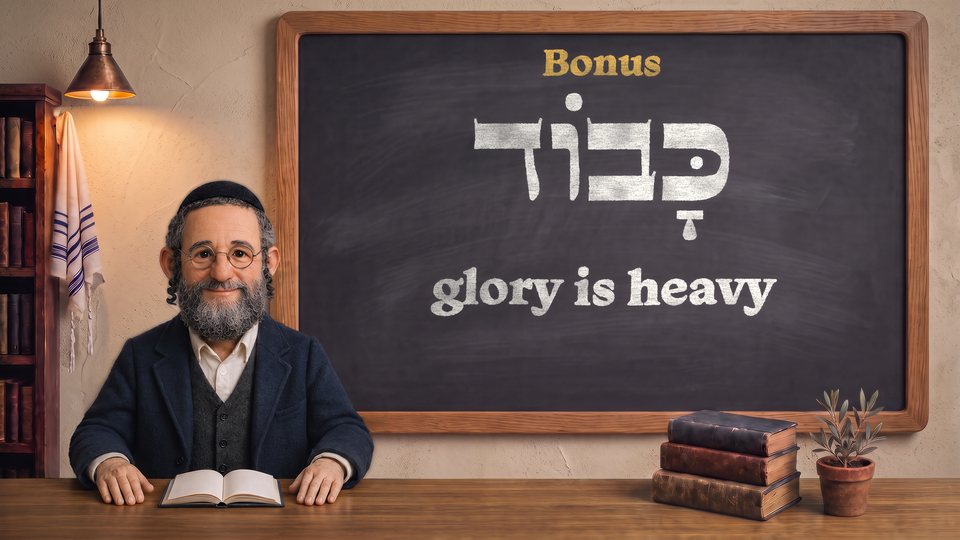
Glory is heavy
See that the Hebrew word for "glory" is at bottom the word for weight, and follow that weight through the book of Exodus, where English needs a different word each time
TranscriptEvery word of the film, with the Hebrew
Download PDFTap a time to play the film from there.
The hook
A man stands on a mountain; and asks for one thing. הַרְאֵנִי נָא אֶת כְּבֹדֶךָ Har’eni na et kevodekha. Show me, please; your glory.
Ask ten readers of the English Bible, what glory is; and most of them will speak of light. Shining. Radiance. A halo. The English word leans that way.
The Hebrew word does not shine. It weighs.
Welcome
שָׁלוֹם Shalom. I am Moreh Ezra; and this is a bonus. Shorter than a lesson. No new rules. One root; followed through one book.
And if you have come here without the lessons before it; you can still follow every step.
The word is כָּבוֹד kavod. Three letters carry it. Kaf. Bet. Dalet.
And those three letters mean, first of all: heavy. כָּבֵד Kaved. Heavy. The same word, letter for letter, is the liver. In the laws of sacrifice, the priest takes the fat that is, עַל הַכָּבֵד al ha-kaved: on the liver.
The heavy one, among the inner parts.
And from heavy, comes our word. כָּבוֹד Kavod. It stands two hundred times in the Hebrew Bible; fifty-one of them in the Psalms. The King James Bible writes, glory, for it; a hundred and fifty-six times. By the end of this film; you will hear something else in it.
Heavy is rich
The plain word, heavy, comes first in the story of Abram. Twice, in one short tale. First: why he went down to Egypt. כִּי כָבֵד הָרָעָב בָּאָרֶץ Ki khaved ha-ra’av ba-arets. For the famine was heavy, in the land.
Then: how he came back. וְאַבְרָם כָּבֵד מְאֹד Ve-Avram kaved me’od. And Abram was very heavy. In what? The verse goes on: in livestock; in silver; and in gold.
The King James says: very rich.
A heavy famine drove him out; and he came home, a heavy man. In Hebrew, that is a compliment. A rich man’s flocks, and his silver, are what he weighs.
And the noun can mean just that. The sons of Laban complain, that Jacob has made, out of their father’s property; אֵת כָּל הַכָּבֹד הַזֶּה et kol ha-kavod ha-zeh. All this, כָּבוֹד kavod. The King James keeps the old word: all this glory. Newer Bibles write: all this wealth.
They are all looking at the same sheep.
To honour is to give weight
If a rich man is a heavy man; then to honour somebody, is to treat that person as heavy. As someone who counts. Hebrew makes a verb for it, by doubling the middle letter of the root. If you have Lesson fifteen; you know that stem. And you know this verse.
כַּבֵּד אֶת אָבִיךָ וְאֶת אִמֶּךָ Kabbed et avikha ve-et immekha. Honour your father, and your mother. Word for word: make heavy; your father, and your mother. Give them weight.
And the opposite? To treat somebody as light. The Hebrew for, light, is קַל qal; and its root gives the language one of its words for: curse. One line of the Bible sets the two roots against each other. It is said to the old priest Eli.
כִּי מְכַבְּדַי אֲכַבֵּד וּבֹזַי יֵקָלּוּ Ki mekhabbeday akhabbed u-vozay yeqallu. For those who honour me, I will honour; and those who despise me; shall be light.
Heavy; and light; on one pair of scales. The King James has: shall be lightly esteemed; which is as close as English can come.
And English has not quite forgotten the picture. We still speak of a weighty matter. Of a heavyweight, in politics. And what we do not respect; we make light of.
Exodus runs on one word
Now open the book of Exodus; and follow the three letters, from the burning bush to the mountain. Six stations. At every one, the Hebrew has the same root; and the King James has a different word.
One. The mouth. Moses does not want to go. He says that he is: כְבַד פֶּה וּכְבַד לָשׁוֹן khevad peh u-khevad lashon. Heavy of mouth; and heavy of tongue.
The King James: slow of speech.
Two. The heart. Pharaoh will not listen. כָּבֵד לֵב פַּרְעֹה Kaved lev Par’oh. Heavy, is the heart of Pharaoh.
The King James: hardened.
Three. The plagues. A heavy heart is answered with heavy blows. A heavy swarm. A heavy hail.
Heavy locusts. And on the livestock: דֶּבֶר כָּבֵד מְאֹד dever kaved me’od. A very heavy pestilence. The King James says, grievous; all four times.
Four. The sea. Here, God says what the whole contest has been for. וְאִכָּבְדָה בְּפַרְעֹה וּבְכָל חֵילוֹ Ve-ikkavedah be-Far’oh u-ve-khol cheilo. And I will get weight; through Pharaoh, and through all his army.
The King James: I will be honoured. And in the middle of the sea, the chariots of Egypt lose their wheels; and drive: בִּכְבֵדֻת bi-khevedut. With heaviness. The king whose heart was heavy; ends with heavy wheels.
Five. The hands. In the first battle after the sea, Israel wins; as long as Moses holds his hands up. But: וִידֵי מֹשֶׁה כְּבֵדִים vi-ydei Mosheh kevedim. The hands of Moses were heavy.
Here, the King James says it plainly: heavy. Hands are heavy in English too.
Six. The mountain. וַיִּשְׁכֹּן כְּבוֹד אֲדֹנָי עַל הַר סִינַי Va-yishkon kevod Adonai al har Sinai. And the כָּבוֹד kavod of the LORD, settled on Mount Sinai.
Slow. Hardened. Grievous. Honoured. Heavy.
Glory. Six English words. A Hebrew reader hears one.
So when Moses says: show me your כָּבוֹד kavod; that reader has already heard the heavy mouth; the heavy heart; the heavy plagues; and the weight that was won at the sea.
And the book ends there. The tent is finished; and the כָּבוֹד kavod fills it; so that Moses cannot go in. A book that began with a man too heavy of mouth to speak; ends with a tent, too full of כָּבוֹד kavod, for him to enter.
Pharaoh's heart
A word about that heart. English readers know one phrase for it: it was hardened. The Hebrew has not one verb here. It has three.
וַיֶּחֱזַק לֵב פַּרְעֹה Va-yechezaq lev Par’oh. And the heart of Pharaoh was strong. That one stands twelve times. כָּבֵד לֵב פַּרְעֹה Kaved lev Par’oh. The heart of Pharaoh is heavy.
Our root: six times. And a third root: hard; stiff. Once, of his heart; and once, of the man himself.
Strong. Heavy. Hard. The first two stand side by side; in chapter seven, verses thirteen and fourteen. The King James writes, harden, for all three.
Some newer Bibles try to keep them apart. Whichever Bible you read; you now know that there are three words under the one. That is as far as the language goes; and this bonus stops there with it.
Old and heavy
One story in the Bible plays on this root, from beginning to end. The story of Eli; the priest at Shiloh. You have heard its sentence already. Here is the charge that comes before it. וַתְּכַבֵּד אֶת בָּנֶיךָ מִמֶּנִּי Va-tekhabbed et banekha mimmenni.
You honour your sons; more than me. He gave the weight to the wrong side.
Then, the sentence: those who honour me, I will honour.
Then, his death. News comes that the ark of God is taken; and Eli falls backwards from his seat; and breaks his neck. And the storyteller adds four words. כִּי זָקֵן הָאִישׁ וְכָבֵד Ki zaqen ha-ish ve-khaved. For the man was old; and heavy.
And last: his grandson; born that same day. The dying mother names him: אִי כָבוֹד i-khavod. No כָּבוֹד kavod. English Bibles write: Ichabod. And she says why.
גָּלָה כָבוֹד מִיִּשְׂרָאֵל Galah khavod mi-Yisra’el. The כָּבוֹד kavod has gone into exile, from Israel.
An English reader meets: honour; heavy; and glory; in these chapters; and has no reason to connect them. In Hebrew, they are one thread.
Where “glory” came from
So how did weight, become glory? By the same road that mercy took, in the last bonus. More than two thousand years ago, Jewish translators put the Bible into Greek. For כָּבוֹד kavod, they chose the word: doxa. In older Greek, that meant, opinion; and then: the opinion that others have of you.
Your reputation. The Latin Bible followed, with: gloria. Fame. And English took the Latin word.
So our, glory, came by way of reputation and fame; and picked up its shine on the road. And that is not wrong. הַשָּׁמַיִם מְסַפְּרִים כְּבוֹד אֵל Ha-shamayim mesapperim kevod El. The heavens are telling, the כָּבוֹד kavod of God.
What the word holds
But underneath; the Hebrew word still weighs something. It is what makes a person count. A man’s herds. A father’s due. And the presence, that settled on a mountain; and filled a tent.
One thing to do. Open Exodus fourteen, in your own Bible; and find the two places where God says: I will get glory; or: I will be honoured. Then go to chapter thirty-three; verse eighteen; and notice what Moses is shown.
And when you next meet, glory, in your English Bible: weigh it. שָׁלוֹם Shalom.
Until next time: לֵךְ לְשָׁלוֹם lekh leshalom. Go in peace.
הַרְאֵ֥נִי נָ֖א אֶת־כְּבֹדֶֽךָ׃
har'ēnî nā' 'et-kəvōdékhā
"Show me, please, your glory." (Exod 33:18)
Moses asks this on the mountain, near the end of the book of Exodus. Ask ten readers of the English Bible what "glory" is, and most will say something about light: shining, radiance, splendour. The English word leans that way.
The Hebrew word does not. כָּבוֹד kāvôd comes from a root that means heavy.
This is a bonus: shorter than a lesson, free, and with no new rules. It follows one root through one book. By the end you will have seen Moses' request with the whole of Exodus standing behind it.
1. One root, many words
The three letters are K-B-D, כבד. Here is the family.
| Script | Read it | Meaning |
|---|---|---|
| כָּבֵד | kāvēd | heavy |
| כָּבֵד | kāvēd | the liver |
| כַּבֵּד | kabbēd | honour! (a command): treat as weighty |
| כָּבוֹד | kāvôd | weight, wealth, honour, glory |
The liver is spelled exactly like "heavy". When a sacrifice is described, the priest takes the fat that is עַל־הַכָּבֵד 'al-hakkāvēd "on the liver" (Exod 29:13): the heavy one among the inner organs.
The noun kāvôd stands 200 times in the Hebrew Bible, and 51 of those are in the Psalms. The plain adjective "heavy" comes first in the story. It turns up twice in one short tale about Abram, and the second time it does not mean heavy at all.
First, the reason Abram went down to Egypt: כִּי־כָבֵד הָרָעָב בָּאָרֶץ kî-khāvēd hārā'āv bā'āreṣ "for the famine was heavy in the land" (Gen 12:10). Then, how he came back:
וְאַבְרָ֖ם כָּבֵ֣ד מְאֹ֑ד בַּמִּקְנֶ֕ה בַּכֶּ֖סֶף וּבַזָּהָֽב׃
wə'avrām kāvēd mə'ōd, bammiqnê, bakkésef ûvazzāhāv
"And Abram was very heavy in livestock, in silver and in gold." (Gen 13:2)
The King James Version says "very rich". A heavy famine drove him out, and he returned a heavy man. In Hebrew, rich is heavy: a rich man's flocks and silver are what he weighs.
And the noun can mean just that. Laban's sons complain that Jacob has made, out of their father's property, אֵת כָּל־הַכָּבֹד הַזֶּה 'ēt kol-hakkāvōd hazzê (Gen 31:1). The King James Version keeps the word, "all this glory". Most newer Bibles write "all this wealth".
2. To honour is to give weight
If a rich man is a heavy man, then to honour somebody is to treat that person as heavy: as someone who counts. Hebrew makes the verb with the doubled middle letter (the stem called the Piel, for those who have Lesson 15).
כַּבֵּ֥ד אֶת־אָבִ֖יךָ וְאֶת־אִמֶּ֑ךָ
kabbēd 'et-'āvîkhā wə'et-'immékhā
"Honour your father and your mother." (Exod 20:12)
Word for word: "make heavy your father and your mother". Give them weight.
What is the opposite? To treat somebody as light. The Hebrew for "light" is קַל qal, and its root gives the language one of its words for "curse". One line of the Bible sets the two roots against each other. A man of God says it to the old priest Eli:
כִּֽי־מְכַבְּדַ֥י אֲכַבֵּ֖ד וּבֹזַ֥י יֵקָֽלּוּ׃
kî-məkhabbəday 'ăkhabbēd ûvōzay yēqāllû
"For those who honour me I will honour, and those who despise me will be light." (1 Sam 2:30)
Heavy and light in one sentence. The King James Version has "shall be lightly esteemed", which is as close as English can come. Sarai knew the feeling. When her servant Hagar was with child, וַתֵּקַל גְּבִרְתָּהּ בְּעֵינֶיהָ wattēqal gəvirtāh bə'ênêhā "her mistress became light in her eyes" (Gen 16:4).
3. Exodus runs on one word
Now open the book of Exodus and follow the root from the burning bush to the mountain. There are six stations. At every one, the Hebrew has the same three letters, and the English has a different word.
1. The mouth Moses does not want to go. He says he is כְבַד־פֶּה וּכְבַד לָשׁוֹן khəvad-pê ûkhəvad lāšôn "heavy of mouth and heavy of tongue" (Exod 4:10). English Bibles say "slow of speech".
2. The heart Pharaoh will not listen.
כָּבֵ֖ד לֵ֣ב פַּרְעֹ֑ה
kāvēd lēv par'ōh
"Pharaoh's heart is heavy." (Exod 7:14)
English Bibles say "hardened", "hard" or "unyielding". More about this heart in the next part.
3. The plagues A heavy heart is answered with heavy blows. The swarm that comes into Pharaoh's house is עָרֹב כָּבֵד 'ārōv kāvēd "a heavy swarm" (Exod 8:24; 8:20 in Hebrew Bibles). The pestilence on the livestock is דֶּבֶר כָּבֵד מְאֹד déver kāvēd mə'ōd "a very heavy pestilence" (Exod 9:3). The hail is בָּרָד כָּבֵד מְאֹד bārād kāvēd mə'ōd "very heavy hail" (Exod 9:18). The locusts are "very heavy" too (Exod 10:14). The King James Version says "grievous" all four times.
4. The sea At the sea God says what the whole contest has been for:
וְאִכָּבְדָ֤ה בְּפַרְעֹה֙ וּבְכָל־חֵיל֔וֹ
wə'ikkāvədâ bəfar'ōh ûvəkhol-ḥêlô
"And I will get weight through Pharaoh and through all his army." (Exod 14:4)
English Bibles say "I will be honoured" or "I will gain glory". And when the Egyptian chariots are in the middle of the sea, their wheels come off, so that they drive בִּכְבֵדֻת bikhvēdut "with heaviness" (Exod 14:25). The king whose heart was heavy ends with heavy wheels.
5. The hands In the first battle after the sea, Israel wins as long as Moses holds his hands up. But וִידֵי מֹשֶׁה כְּבֵדִים wîdê mōšê kəvēdîm "the hands of Moses were heavy" (Exod 17:12), and two men have to hold them up for him. Here English says "heavy" too: hands are heavy in English as well.
6. The mountain At Sinai the word arrives where the book has been taking it:
וַיִּשְׁכֹּ֤ן כְּבוֹד־יְהוָה֙ עַל־הַ֣ר סִינַ֔י
wayyiškōn kəvôd-[the LORD] 'al-har sînay
"And the glory of the LORD settled on Mount Sinai." (Exod 24:16)
Then comes Moses' request, the verse at the top. And the last scene of the book: the tent is finished, וּכְבוֹד יְהוָה מָלֵא אֶת־הַמִּשְׁכָּן ûkhəvôd [the LORD] mālē' 'et-hammiškān "and the glory of the LORD filled the dwelling" (Exod 40:34).
Slow, hard, grievous, honoured, heavy, glory: six English words. A Hebrew reader hears one. When Moses says "Show me your kāvôd", that reader has already heard the heavy mouth, the heavy heart, the heavy plagues and the weight that was won at the sea.
The book that starts with a man too heavy of mouth to speak ends with a tent so full of glory that he cannot enter it.
4. Pharaoh's heart
English readers know one phrase for this heart: it was "hardened". The Hebrew does not have one verb here. It has three.
| Script | Read it | Word for word | How often |
|---|---|---|---|
| וַיֶּחֱזַק לֵב פַּרְעֹה | wayyeḥĕzaq lēv par'ōh | and Pharaoh's heart was strong (Exod 7:13) | 12 times |
| כָּבֵד לֵב פַּרְעֹה | kāvēd lēv par'ōh | Pharaoh's heart is heavy (Exod 7:14) | 6 times |
| אַקְשֶׁה אֶת־לֵב פַּרְעֹה | 'aqšê 'et-lēv par'ōh | I will make Pharaoh's heart hard (Exod 7:3) | 2 times |
The first is the root Ḥ-Z-Q "be strong, hold firm". The second is today's root. The third is the root Q-Š-H "be hard, stiff". Its second place is Exodus 13:15, where no heart is named: Pharaoh "was hard" about letting Israel go. The strong heart and the heavy heart stand in two verses next to each other, 7:13 and 7:14.
The King James Version writes "harden" or "hardened" for all three, and many English Bibles follow it. Some newer ones try to keep them apart.
That is as far as the language goes, and this bonus stops there with it.
5. Old and heavy
One story in the Bible plays on this root from beginning to end. It is the story of Eli, the priest at Shiloh, and it comes back to the root in four scenes.
First the charge against him: וַתְּכַבֵּד אֶת־בָּנֶיךָ מִמֶּנִּי wattəkhabbēd 'et-bānêkhā mimménnî "you honour your sons more than me" (1 Sam 2:29). He gave the weight to the wrong side.
Then the sentence you have read: "those who honour me I will honour" (1 Sam 2:30).
Then his death. News comes that the ark is taken, and Eli falls backwards from his seat and breaks his neck:
כִּֽי־זָקֵ֥ן הָאִ֖ישׁ וְכָבֵ֑ד
kî-zāqēn hā'îš wəkhāvēd
"for the man was old and heavy" (1 Sam 4:18)
The man who gave no weight to God dies of his own.
And last, his grandson, born the same day. The dying mother names him אִי־כָבוֹד 'î-khāvôd "No glory" (1 Sam 4:21). English Bibles write the name Ichabod. She explains it herself: גָּלָה כָבוֹד מִיִּשְׂרָאֵל gālâ khāvôd miyyiśrā'ēl "the glory has gone into exile from Israel".
An English reader meets "honour", "heavy" and "glory" in these two chapters and has no reason to connect them. In Hebrew they are one thread.
6. Where the English word comes from
So how did weight become "glory"? Through two translations.
About two hundred and fifty years before Christ, Jewish scholars in Egypt put the Hebrew Bible into Greek. For kāvôd they chose the Greek word doxa. In older Greek that word meant "opinion", and then "the opinion others have of you": your reputation. Later the Latin Bible followed with gloria, "fame, renown". English took the Latin word.
So the English "glory" reached us by way of reputation and fame, and picked up its shine on the road. None of that is wrong. A psalm you may know by heart uses the word in just the sense English readers expect:
הַשָּׁמַ֗יִם מְֽסַפְּרִ֥ים כְּבֽוֹד־אֵ֑ל
haššāmáyim məsappərîm kəvôd-'ēl
"The heavens are telling the glory of God." (Ps 19:1; 19:2 in Hebrew Bibles)
But underneath, the Hebrew word still weighs something. It is what makes a person count. It can be a man's herds, a father's due, or the presence that settled on a mountain and filled a tent.
For those who have Lessons 14 to 16 You have now seen this root in four stems. Qal: kāvēd "be heavy". Piel: kabbēd "give weight to, honour". Niphal: 'ikkāvədâ "let me get weight" (the long form of a wish, Lesson 11). Hiphil: the people complain to Solomon's son אָבִיךָ הִכְבִּיד אֶת־עֻלֵּנוּ 'āvîkhā hikhbîd 'et-'ullēnû "your father made our yoke heavy" (1 Kgs 12:10). One root, and the stems do the rest.
7. What you just did
You followed three letters through a whole book, and saw what no translation can show at once: that the slow mouth of Moses, the hard heart of Pharaoh, the grievous plagues, the honour won at the sea and the glory on the mountain are, in Hebrew, one word.
When you next meet "glory" in your English Bible, weigh it.
Before next time Read Exodus 14 in your own Bible and find the two places where God says "I will get glory" or "I will be honoured". Then read Exodus 33:18 to 23, and notice what Moses is shown.
8. Words
| Transliteration | Meaning | Root | Script |
|---|---|---|---|
| kāvôd | weight, honour, glory | K-B-D | כָּבוֹד |
| kāvēd | heavy; rich | K-B-D | כָּבֵד |
| kabbēd | honour! (the command of the verb "give weight") | K-B-D | כַּבֵּד |
| qal | light, quick | Q-L-L | קַל |
Exercises
Type your answers in plain letters; accents and hyphens don't matter. The four new words of this bonus are on the Vocabulary page too.